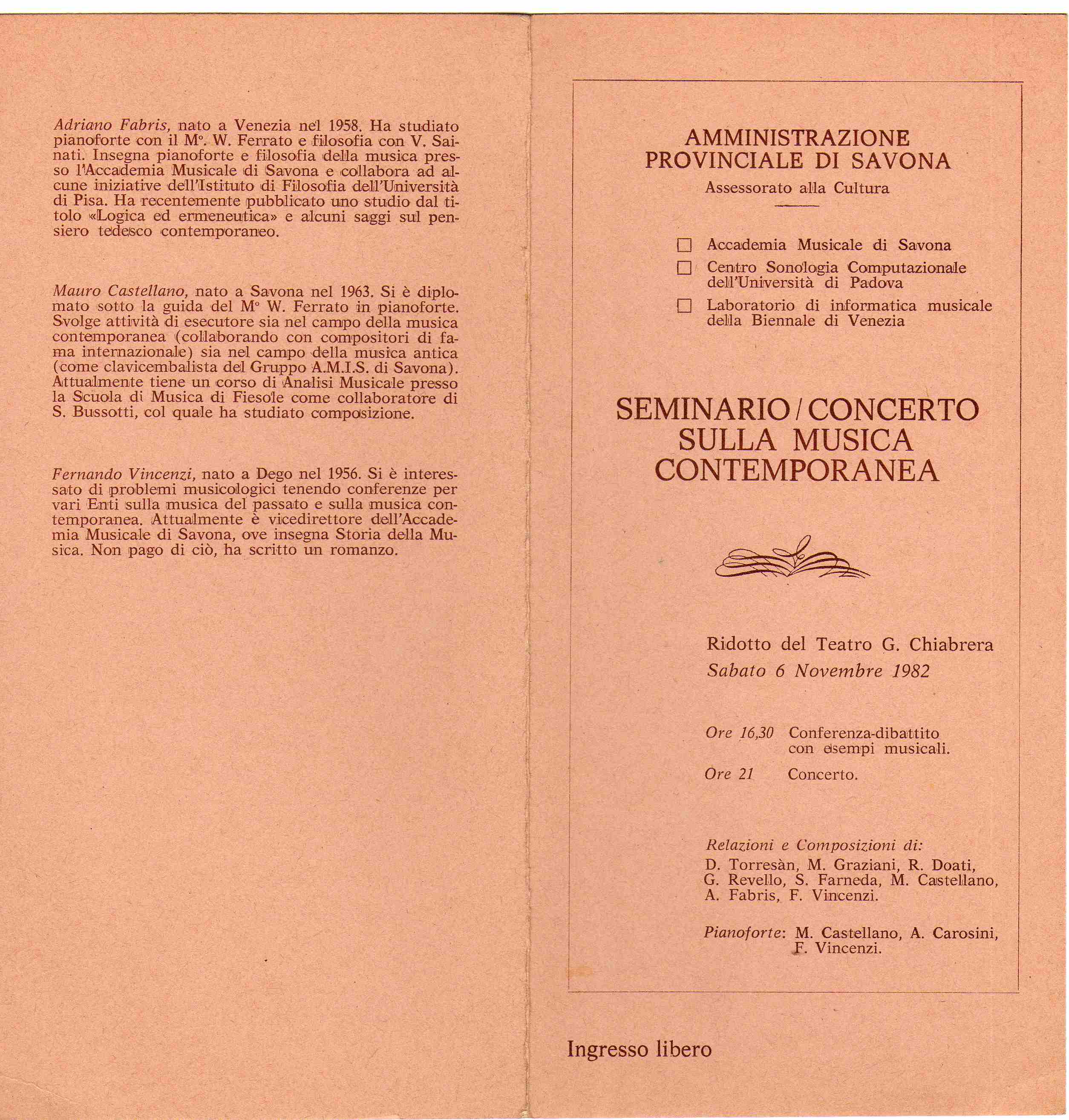
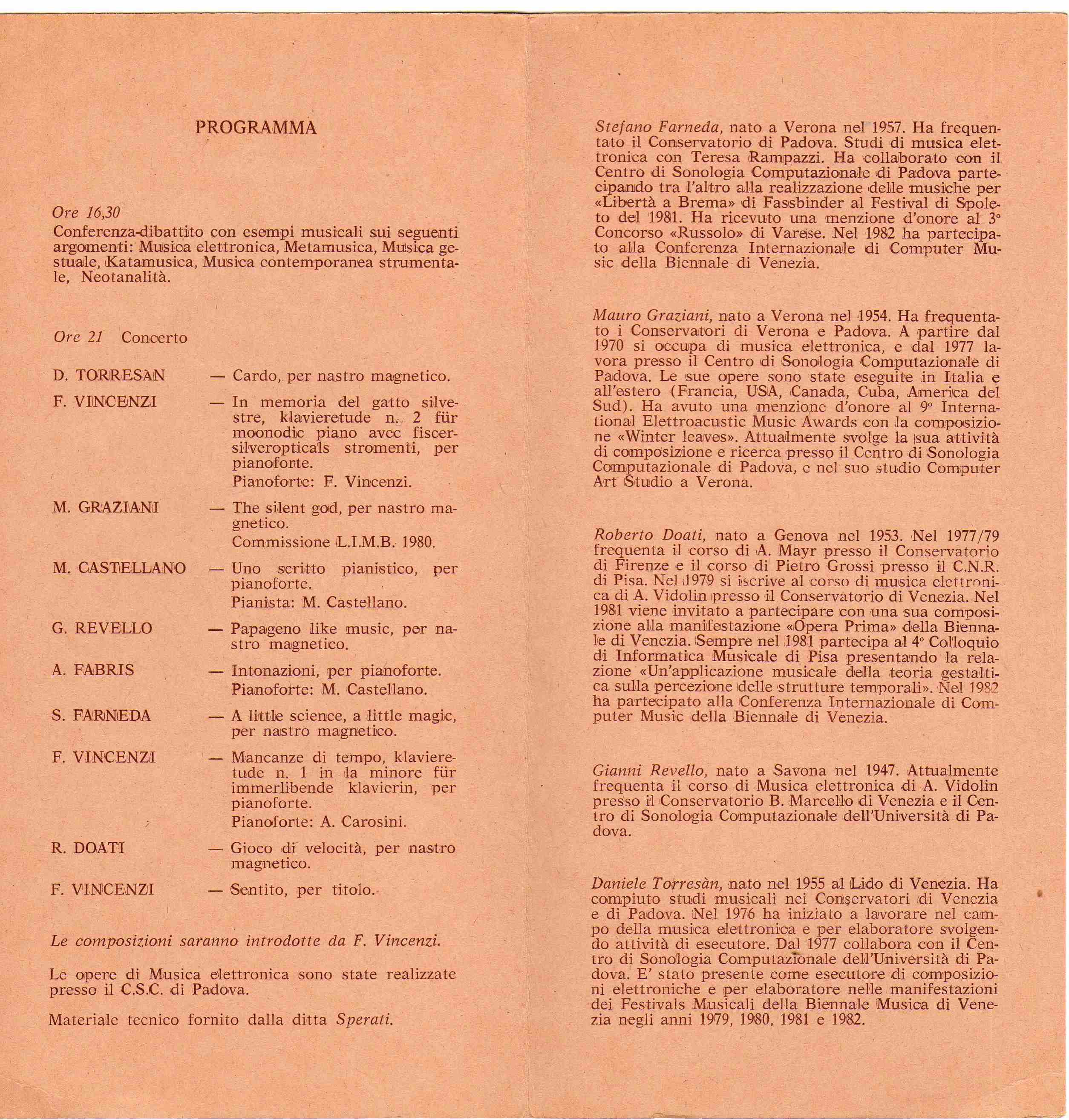
1980 - composizione "CARDO" Computer Music
CARDO (1980)
Daniele Torresan - (Venice Music Conservatory- Center of Computational Sonology University of PD.)
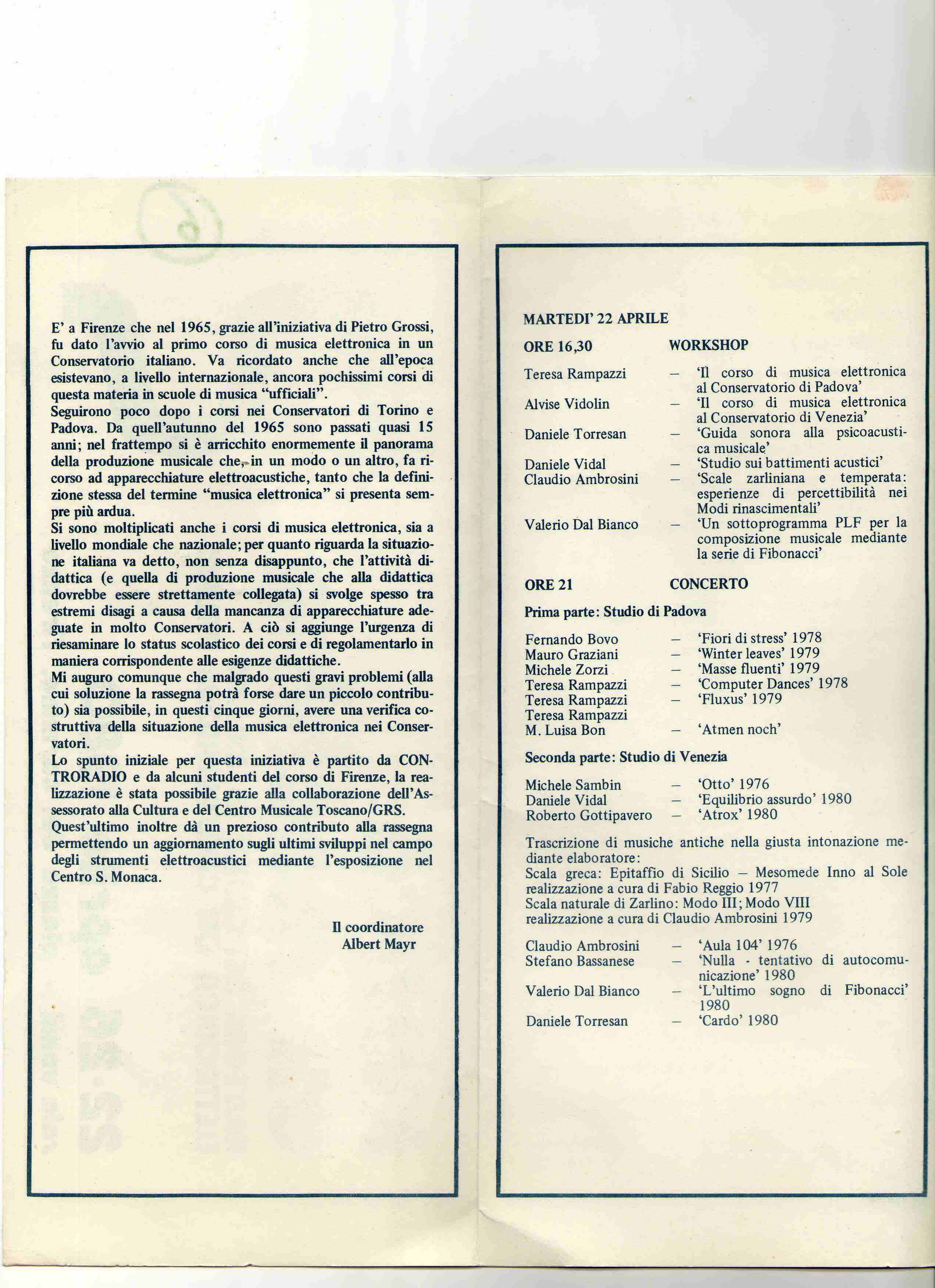
The composition was made with an IBM 370/158 computer (S/7 interface) at the sonology center of the University of Padua in the period November '79-January' 80.
The programming languages used are the Music V for the synthesis of sound and music 360 for the mix of sections.
The composition can be defined as a study for three modules Music V used in summary.
This study was used to verify the possibilities of these three instruments, two of which were derived from the sound catalogue made by J.C. Resets at the Bell Laboratories. The sound models generated are: pure tone bands, percussive sounds and bell-type sounds.
The formal construction of the piece does not exist, there are sequences of sounds built in relation to a breakdown of photographic images of an object taken from several points of view. The object under examination is a "cardo" (Marian) flower, a plant that lives in hilly and mountainous regions.
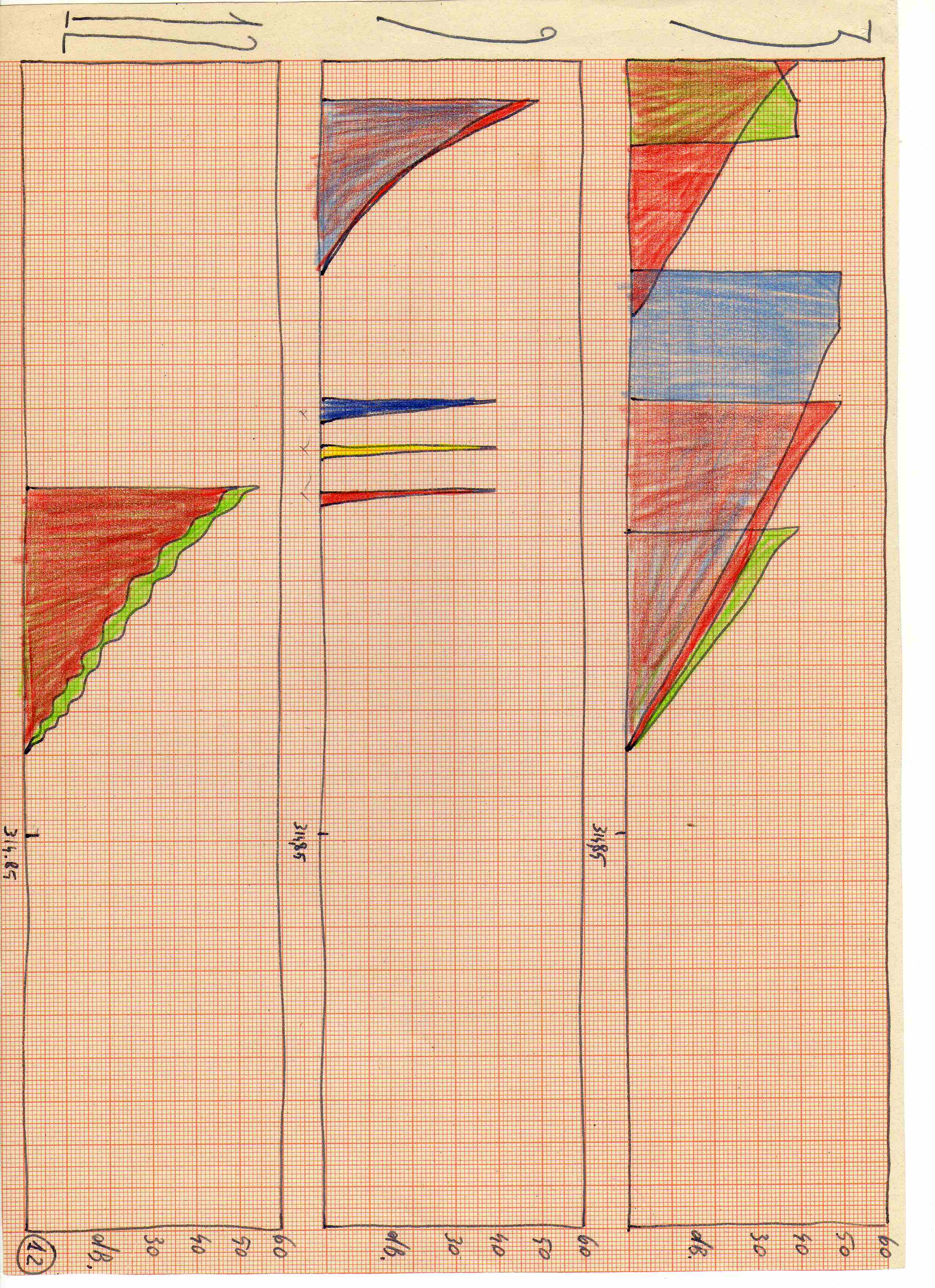
The 'decomposition' of the images consists in the transcription of the photographs in the form of sound parameters on a plane with Cartesian coordinates frequency and time •
The Cordo consists of three fundamental elements: trunk-branches, leaves and flowers. To each of these elements I associated a Music V instrument taking into account the following relationships:
- general shape of the element -+ type of amplitude envelope.
-- trunk-branches: very variable shapes and sizes --+ amplitude envelope of various types : percussive triangular, bell-shaped, triangular with slow attack .
-- leaves and flowers: generally constant forms -+ envelope of only one type , percussive
- characteristics of the surface of the! element--+ spectral content.
-- trunk-branches: very irregular surface in relation to the branches, to the section of the trunk, This element is associated with the instrument that generates bands of sine sounds of three types :1) smooth surface -+ spectrum with spectral components that fall into the area of distinguishability of contemporary tones (critical band).
2) rough surface--spectra with ghostly components that generate 1st order beats.
3) very uneven surface-+spectra with ghostly components falling into the critical band zone, 'roughness' zone.
-- leaves --+ surface with constant formal characteristics, this element is associated with the instrument that generates sounds of the type 'bell'.
-- flowers -+ c.s., this element is associated with the instrument that generates sounds type 'tympanum'.
Dynamics are determined by a range of possibilities that are related to photographic shooting distances.
The piece consists of the succession of 'n' photographs in which you can distinguish moments of polyphony, which correspond to global images of the object, and moments of monody, which are related to images of individual parts of the plant.
The form of the composition is given by the 'gestaltic' processes of organizing musical models, composed unconsciously during the learning of sounds in the unfolding of the piece.